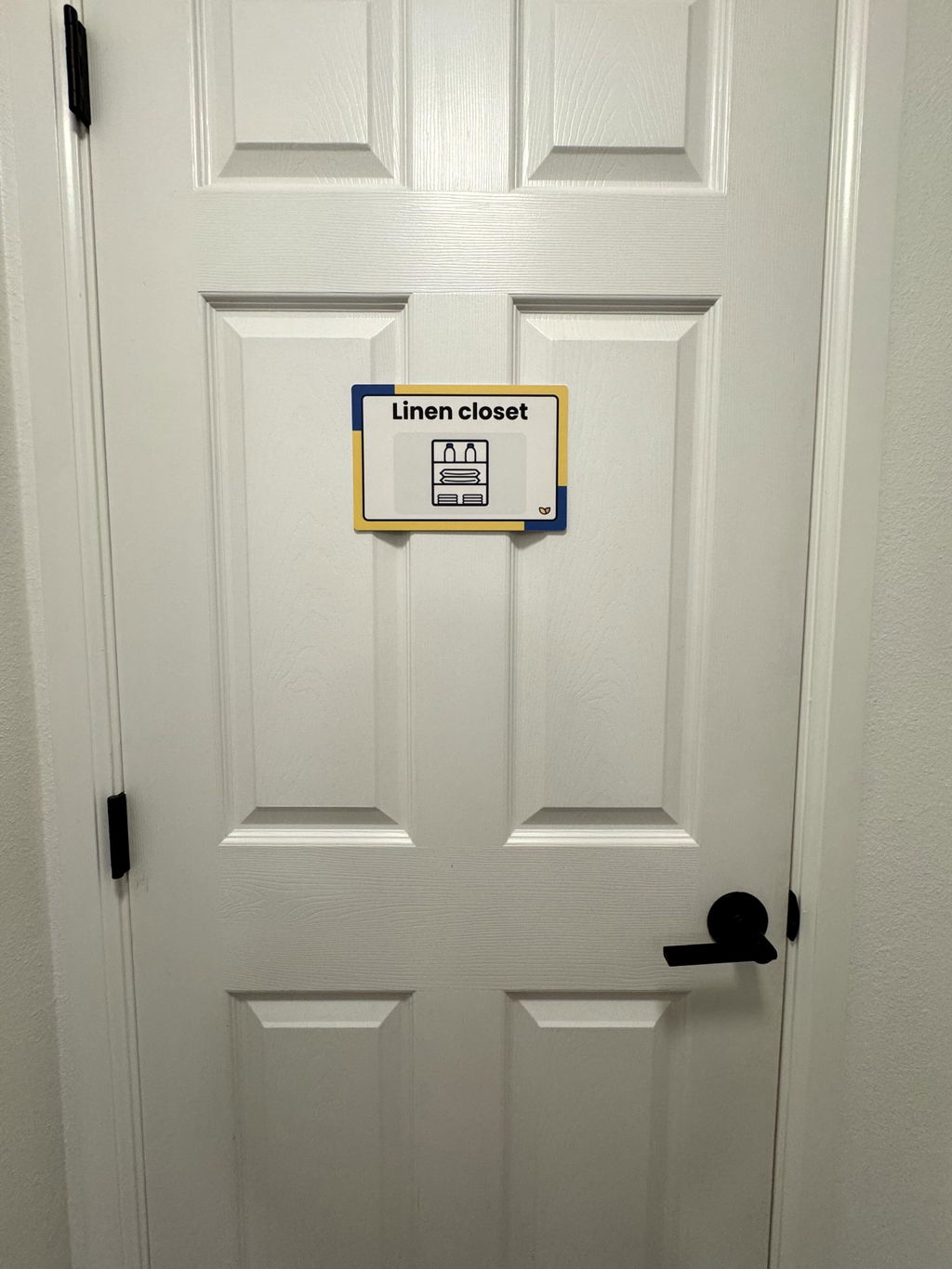
DIY or Generic Signs

- DIY takes time; custom signs can be costly
- May rely on text alone
- Mixed styles can look institutional or cluttered
- Often only have fixed information
- Glossy surfaces can create glare


22 premium room signs for home with clear visual cues—making rooms easier to recognize and home easier to navigate
Get Complete Visual Support System

Pair your door signs with complementary visual cues—from finding items to finding the right rooms
The Familiar Space™ is a comprehensive visual cue system designed to help individuals living with dementia, Alzheimer's, and memory loss navigate their home with greater confidence and independence.
Thoughtfully designed to support wayfinding and daily orientation, these room signs provide essential, dignified guidance throughout your living environment – whether your loved one is transitioning to a new living arrangement or aging in place.
Each sign features simple text and intuitive icons in warm, neutral colors that blend beautifully into any home décor. By placing them on bedroom doors, bathrooms, or in the kitchen, you can help reduce repetitive questions, ease caregiver strain, and create a more navigable, dementia-friendly environment.
By supporting independent navigation, these signs minimize the need for constant verbal cues, freeing up cognitive energy and making space for more meaningful moments together.
Sign: 9” W x 6” H
Sticker sheet: 9” W x 6” H
Package: 9.8" x 6.7" x 2.4"
Package Weight: 1.8lbs

Door Signs for Wayfinding Support
$49.00
$59.00


Why Wayfinding Support Matters
Similar-looking doors and hallways can make finding the bathroom, bedroom, or kitchen confusing—especially when surroundings are new or memory changes make familiar spaces harder to recognize.
Well-placed room signs pair clear words with intuitive icons, helping people recognize their destination without relying on memory alone. At home or in a care community, these visual cues support more confident navigation, with less need to ask someone for directions and less awkward moments.
Designed for Inclusive Spaces
Designed to make important spaces easier to recognize and navigate, the door signs support independence, confidence, and dignity across ages and abilities
Parents, family and professional caregivers building visual routines
People recovering from brain injury or stroke
Adults experiencing memory or cognitive changes
Transitional housing and group living environments
Anyone who benefits from a cognitively accessible environment
SEE THE DIFFERENCE
Coordinated wayfinding signs and directional cues create recognizable points of reference—making rooms easier to identify and the space easier for everyone to navigate.
 After: Clarity built into the environment
 Before
Thoughtful Down to Each Visual Element
Sticky notes fall off. DIY signs can look out of place. Aegeliss brings professionally designed visual support into one ready-to-use set. Clearer directions for them. More peace of mind for you.

Made for Easier Life Day to Day
From family homes to professional care settings, our products help create more familiar, supportive and accessible everyday experiences.
Make familiar rooms easier to recognize for every family member
Help children identify rooms and older family members find their way with greater confidence. Clear bathroom, bedroom, and kitchen signs offer consistent reference points, with less need for repeated directions.

Less repetitive verbal directions. A more welcoming visit
Help visiting friends, relatives, and caregivers find the right room and recognize which spaces are private or off-limits. Clear door signs make boundaries easier to understand, so guests can navigate with confidence, and hosts spend less time giving directions.

Offer another way to express a need
When finding words is difficult, a room sign can offer something to point to. Clear words and icons provide an additional communication option that speech-language therapists can explore with people experiencing aphasia or other communication challenges.

Similar-looking doors can make shared homes confusing. Coordinated room signs distinguish shared and private spaces, while a personal photo on a bedroom sign helps residents recognize their own room—all in a warm, residential design.

Build familiarity in unfamiliar surroundings
Moving into assisted living, memory care, or another residence means learning where everything is. Familiar words, intuitive icons, and personal bedroom photos provide recognizable reference points as the person settles into their new surroundings.

Make shared spaces easier for everyone to navigate
Help people find bathrooms, dining rooms, and other shared destinations without stopping to ask. Consistent room signs and optional directional arrows make hallways easier to follow for regular visitors and first-time guests alike.

How to Get Started
Start with the spaces that matter most, then add or adjust signs as needs and surroundings change.

Step 1
Walk through the space together. Whenever possible, invite the person to choose helpful room signs and check that the words and icons are familiar and easy to understand.

Step 2
Customize the bedroom sign and the front door sign where helpful. Mount signs at a comfortable eye level, with good lighting and little visual clutter nearby.

Step 3
Give the person time to notice and become familiar with the signs. Adjust placement, add cues, or simplify the setup based on what helps them find their way.
The comprehensive visual support system that makes all the difference
Finding the bathroom, bedroom, or kitchen should not have to depend entirely on memory, guesswork or someone else pointing the way.
Aegeliss brings clear words, intuitive icons, personal photos, and directional cues together in one coordinated system. Familiar reference points make rooms easier to recognize, whether at home or somewhere new.
Finding your own way is more than reaching a room. It’s being able to choose where to go, feel more at ease, and enjoy the satisfaction of “I can do this.” Small successes like these can build confidence that carries into other parts of everyday life.

Trusted by


Hear how Aegeliss room signs help people do more for themselves—making care a little easier and bringing more light to everyday life
Questions Before You Get Started?
Looking for another language? You’re in good company—it’s one of our most popular requests! Join our newsletter to hear when new language options arrive.
Door signs put helpful information where it’s needed. A clear word and recognizable icon can make finding the bathroom, bedroom, or kitchen easier without relying on memory alone.
Aegeliss combines consistent room signs, directional arrows, and a personal bedroom photo option to offer different points of recognition. Start with the room the person has the most difficulty finding, then build from there.
Finding their own way can help someone feel more capable and confident, supporting dignity and self-confidence in everyday moments. For caregivers, fewer repeated directions can mean less stress and more time for conversation, connection, and simply being together.
No. Aegeliss room signs are for anyone who benefits from clearer directions—children learning their way around, adults with cognitive support needs, guests or caregivers visiting an unfamiliar home, or inclusive communal spaces.
The warm, modern design fits everyday spaces, with no dementia or Alzheimer’s wording on the signs or packaging. They’re practical support that still feels like home.
The set includes 22 room signs, two sticker sheets for personalization and directional cues, 44 mounting strips, and a step-by-step guide.
Add a meaningful photo to the “My Bedroom” sign, personalize the front-door reminder list, and use arrows to point toward rooms that aren’t immediately visible. You can display just the signs you need—there’s no need to put them all up at once.
Use the included adhesive strips and follow the surface-preparation instructions in the guide. Position signs where the person naturally looks, at a comfortable viewing height with good lighting and little clutter nearby.
Each sign measures 9″ wide × 6″ high. Before mounting, walk through the space together and check that the words, icons, and placement make sense to the person using them.
The Door Signs are made from heavy-duty cardstock with a matte finish, so they should be kept dry. They are different from our waterproof TPE Home & Routine Labels.
Use a bathroom sign outside the room, away from splashes and steam. The matte finish helps reduce glare, keeping words and icons easier to view.
Yes. The coordinated wayfinding signs work in private homes, adult family homes, assisted living, memory care, nursing homes, and other shared residences.
Similar-looking doors can be difficult to tell apart. Inconsistent and institutional signages can be hard to understand. Room names, icons, and personal bedroom photos provide recognizable reference points as someone settles in. When moving existing signs, use new adhesive strips as needed.
Before putting up a sign, look at it and read it together. See whether the person understands the words or icon or can point to the sign to express a need.
If it makes sense to them, involve them in choosing its location and putting it up. Place it at their eye level, with good lighting and little surrounding visual clutter, and check that they can see it clearly.
Once it’s up, show them where it is and gently draw attention to it a few times during everyday use. Give it a few days to become familiar, then adjust the placement or cue based on their response.
No. Door signs offer visual guidance; they cannot prevent someone from leaving or entering a space.
“Please Do Not Enter” and “Please Do Not Open” signs can communicate boundaries or provide reminders, but they do not replace supervision or other appropriate safety measures. Their role is to make the environment easier to understand.