Best Seller

Home & Routine Labels for Daily Independence

100+ premium waterproof labels for home with clear visual cues for everyday items, daily routines and safety reminders

$149.00 $129.0013% SAVE
Find everyday items with greater confidence
Return belongings to the right place
Follow daily routines step by step
Keep important safety reminders visible

Get Complete Visual Support System

Door Signs for Wayfinding Support

Door Signs for Wayfinding Support

Pair your labels with complementary visual cues—from finding the right room to finding what’s inside.

$169.105% SAVE
Description

Greater Clarity and Confidence, Every Day

Aegeliss Home & Routine Labels are a comprehensive visual support system designed to make everyday spaces, belongings, routines, and reminders easier to recognize and follow. Created especially for people experiencing cognitive changes, they can also benefit anyone who thrives with a more cognitively accessible home environment and clear visual structure.

Unlike ordinary labels for home, each visual cue combines clear words, intuitive icons, and a simple, modern design to make information easier to recognize at a glance. They can help someone find what they need, return belongings to the right place, and follow familiar routines with less reliance on memory or repeated verbal prompting.

Reusable and flexible enough to move as needs or environments change, the labels create a prepared home environment—preserving greater independence for the person and bringing a little more ease to the people who care for them.

Why You’ll love it
  • Clear Words & Intuitive Icons: Large text paired with simple icons makes information easier to notice, recognize, and act on
  • A Comprehensive Visual Support System: 100+ thoughtfully designed visual cues for everyday items, daily routines, and safety reminders throughout the home 
  • Waterproof, Washable & Reusable: Peel, reposition, and reuse the labels without sticky residue as routines or environments change  
  • Dignity-First & Modern: Neutral colors and an elegant aesthetic blend naturally into the home, with no stigmatizing language on the labels or packaging    
  • Flexible placement: Apply labels directly to smooth surfaces, use the included closet divider hangers, or mount them on blank cards for textured surfaces
  • Soft, Tactile & Non-Glare: The soft, flexible TPE material creates a pleasant tactile experience, while the matte finish helps improve visibility
Materials

Labels: Premium, matte-coated TPE (thermoplastic elastomer)

Instructions guide, blank cards, closet dividers: Paper

Packaging: 100% recyclable paper Kraft box

What is inside?

100+ pre-designed and customizable visual cues for everyday life 

  • 20 sheets of Everyday Item Labels - for kitchen, bathroom, closet, laundry room and general living areas
  • 12 sheets of Procedure & Reminder Labels— for daily routines, step-by-step tasks, and safety reminders 
  • 20 Blank mounting cards— assorted sizes for textured surfaces 
  • 40 Wall-Mounting Adhesive Strips 
  • 6 Closet divider hangers
  • 1 Step-by-step instructions guide

Home & Routine Labels for Daily Independence

$129.00 $149.00

Real Homes. Real Life Moments

See Aegeliss Room Signs in Real Life

From finding the right room to expressing a need, see how families and care communities use Aegeliss room signs to support independence and communication

Why Visual Support Matters

Clear Reminders for Safer Routines and Greater Independence

Daily tasks like washing hands or finding everyday items involve many small steps. Whether a young mind is learning a routine or an adult needs a little extra guidance, clear visual cues can make those steps easier to follow.

A well-placed label offers a gentle reminder: where things belong, what to do next, or when to pause for safety. From building everyday habits to supporting memory changes, visual labels help people do more for themselves—with greater confidence and less prompting.

One Kitchen, Two Different Experiences

See What Best-in-Class Visual Support Can Look Like

Sticky notes fall off. Tape leaves residue. Mismatched labels add visual clutter. Aegeliss brings it all together in one coherent system—keeping helpful information visible and your home feeling like home.

After: Clarity built into the environment
Before

Who Can Benefit from Visual Support?

Designed to make everyday spaces easier to understand and use, visual cues support independence, confidence, and dignity across a wide range of needs

  • Parents, family and professional caregivers building visual routines

  • Home organization and aging-in-place professionals

  • Adults experiencing memory or cognitive changes

  • People recovering from brain injury or stroke

  • Anyone who benefits from a cognitively accessible environment

Simple to Introduce, Easy to Adapt

How to Use Aegeliss Labels for Home

Start with what would make life easier today. Add, move, or simplify visual cues as routines and needs change

1

Share and Discuss

Review the labels with your loved one and make sure the words and images feel familiar and easy to recognize.

2

Peel and Apply the Labels

Invite them to choose where each label goes, then place them on cupboards, drawers, and doors where they can see clearly.

3

Adjust as Needs Change

Reposition, add, or simplify labels as routines, abilities, or living environments change—so the support continues to fit the person, not the other way around.

Thoughtful Down to the Material

Not All Labels for Home Are the Same

See how standard organization labels compare with visual cues purpose-built for cognitive support

DIY Home Labels

  • Time spent designing, printing and taping
  • Small-print and text-only labels may be hard to interpret
  • Often single-use, paper can wear with water
  • May fall off quickly or damage beautiful cabinets
  • Home feeling like an ocean of warnings

Aegeliss

  • 100+ pre-designed visual cues ready to use
  • Designed for cognitive accessibility
  • Waterproof, washable & reusable
  • Peel, reposition & reuse without sticky residue
  • Modern & dignity-first design

Made for Real Life Moments

One Visual Support System. Many Ways to Use It

From family kitchens to care communities and shared spaces, Aegeliss adapts to the person, the environment, and the whole family’s needs

Multi-Generational Living

More clarity for everyone under one roof

Help big kids build independent habits, support an older parent experiencing memory changes, and make everyday items easier for everyone to find. One clear system supports different ages and abilities.

Family, Friends and Visitors

Less searching. Fewer questions. Easier helping

Help visiting relatives, neighbors, and care partners find what they need and put it back. Clear labels make lending a hand easier, without asking the homeowner where everything belongs.

Home Care Agencies

Easier visits across caregivers

Help clients and visiting care teams find supplies, follow routines, and keep important reminders visible. A consistent labeling system helps different team members follow the household’s preferred setup and makes it easier for clients to take part.

Occupational Therapy

Support recovery with clear visual cues

Help people locate everyday items, follow task steps, and practice familiar routines. As part of an individualized occupational therapy plan, visual labels can provide external reminders during brain injury rehabilitation and support participation in activities of daily living at home.

Short-Term Rentals & Vacation Homes

Help guests settle in and find essentials with ease

Make kitchenware, linens, and safety essentials easier to find without opening every cabinet. Coordinated labels help reduce repeat questions while keeping the space tidy and welcoming.

Nursing Home and Memory Care

More resident independence. Fewer repeated directions

Help residents recognize belongings, follow familiar routines, and notice safety reminders. Consistent visual cues support everyday participation while reducing the need for staff to repeat directions.

Transitional Stays

Bring familiar cues into unfamiliar spaces

Reusable labels can travel with the person, helping them locate essentials and follow routines during rehabilitation, respite care, or a move. Familiar cues offer recognizable points of reference when surroundings change.

Trusted by

  • RehabMart, an Occupational Therapist-led marketplace
  • SMP Companionship & Care
  • AskSamie, an Occupational Therapist led marketplace
  • Center for Applied Research in Dementia
  • Nolia Health
  • City of Bellevue
  • Northwest Parkinson's Foundation
  • Flying Angel Home Care
  • Alzheimer's Association
  • MINORITY WOMEN'S BUSINESS ENTERPRISES
  • Missouri Assisted Technology
  • Murano Senior Living

The innovative material that makes all the difference

Lasting Visual Support for Home and Beyond

Our waterproof labels are made from an innovative, flexible, jelly-like material that you can remove and reuse effortlessly. Reorganize a drawer, adjust a routine, or move to a new home—the same labels can come with you.

The value goes beyond keeping things organized. From a home closet to a communal workplace kitchen, clear visual cues help people find what they need, put things back, and notice safety reminders. One coordinated system makes shared spaces easier for everyone.

Safety note: Not edible. Not suitable for anyone who mouths, chews, or swallows non-food items, including people with pica.  

Why People Are Raving About Aegeliss Labels

From greater independence at home to easier daily routines, we are proud to make an impact every single day

He loved the labels with squealing delight

Deanna Heuring

Special Education Teacher, Owner of Graceful Transitions

I worked in a client’s home to encourage independence and increased speech. The little guy they were put up for made his dad read him EVERY one of them with squealing delight knowing they were all for him.

The procedural labels are a game changer

Alyssa Aguirre

Assistant Director, Dementia Care Transformation, Department of Neurology, UT Austin

The Montessori-inspired labels for cupboards, drawers, and daily routines give people living with memory loss clear visual cues to navigate their own home more independently. The procedural labels are a game changer. These are the kinds of tools I wish more families knew about.

Made bath time much easier for both of us

Carolina

Home Care Staff

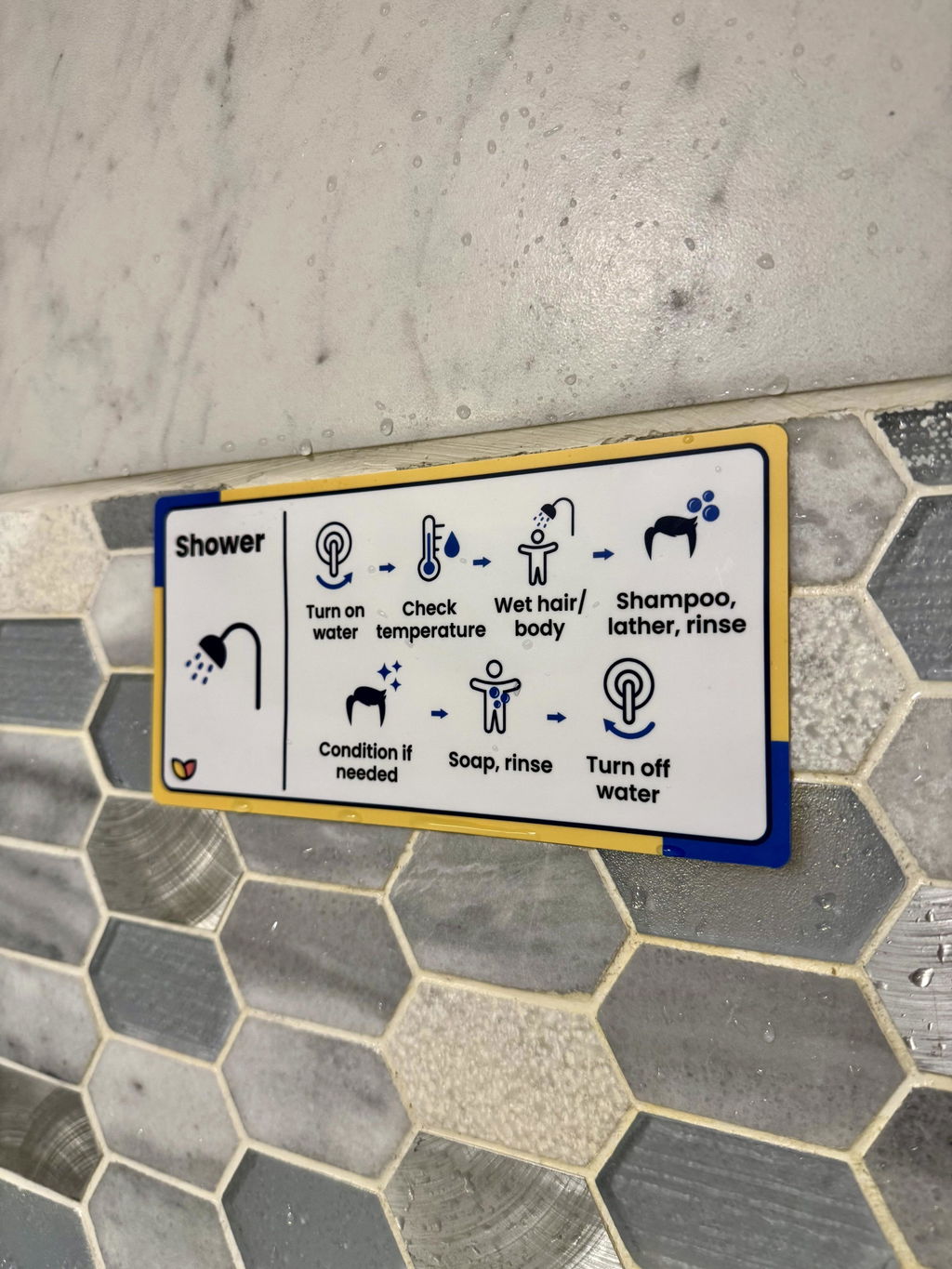
I care for a gentleman with late-stage Alzheimer's and Parkinson's disease. The shower labels have made bath time much easier for both of us. Before we used them, he’d pause and look to me for each step, which sometimes led to frustration. Now he recognizes the shampoo and body wash with prompting. On days he is more alert, he even comments on the pictures and likes to talk about which one comes next. The labels have held up well with all the steam and water, and it's nice to see him more involved in this daily routine.

The difference was instantly noticeable

Karen Xin

Wife Caring for Husband Living with Dementia, Adult Day Care Program Leader

The labels are high quality, easy to peel, and simple to apply. They’ve been very helpful for both my husband and me, making everyday tasks easier. They even make our older cabinets look brighter and more refreshed.

I have not found a kitchen tool misplaced

Jennifer

Wife Caring for Husband with Dementia

My husband uses them, and so far, I haven’t found a kitchen item misplaced. He does the dishes and runs the dishwasher. He emptied it, and glasses, plates, spoons, and forks are all in their proper place.

Helpful in Maintaining My Independence

Colin

Person Living with Moderate Dementia

Recently, I found it increasingly difficult to empty the dishwasher and return the items to their proper places. This has led to confusion and misplaced kitchenware. After receiving Aegeliss labels, I placed them in the desired locations on each cupboard door and drawer front. This process allowed me to place each kitchen item in a clearly marked spot. I am very satisfied with these updated cabinet labels. The design and clear illustrations make it much easier for me to identify where each kitchen item belongs. This visual approach is far superior to the text-only labels I had previously used.

These labels have been a lifesaver

Jenelle

Mom of Two Children with Special Needs

Both my boys have ADHD, and I’m constantly reminding them about everyday things. Did you flush? Did you wash your hands? As a busy mom, repeating myself all day wears me out. These labels have been a lifesaver. Now they remember to flush, follow the steps for washing hands and brushing teeth, and even find an extra roll of toilet paper on their own. It’s nice to have more conversations that aren’t just me reminding them what to do next.

Have more questions about our labels? We’ve got you covered

Frequently Asked Questions about Home & Routine Labels

How can labels and visual cues help people with dementia or people with cognitive changes?

Visual cues place helpful information exactly where it is needed, so a person does not have to rely on memory alone. Used this way, labels can serve as practical memory aids for dementia and other cognitive changes—a label on a drawer can show what is inside, a step-by-step cue can show what comes next, and a safety reminder can prompt an important check during a familiar routine.

Thoughtfully placed visual support can make everyday tasks easier to follow, reduce repeated verbal prompting, and help someone participate in daily routines with greater confidence and independence.

Aegeliss labels combine clear words and intuitive icons, so information is easier to recognize at a glance while keeping the home feeling familiar, modern, and dignified.

How are Aegeliss labels different from regular labels for home?

Most labels for home are designed mainly for organization. Aegeliss labels are designed as visual cues for cognitive support.

Each label combines large, clear words with intuitive icons, strong contrast, and a non-glare finish to make information easier to recognize. The set also goes beyond simple item labels, with step-by-step routine cues and safety reminders designed for everyday life.

They are made from soft, waterproof, reusable TPE that can be peeled off, repositioned, and reused without sticky residue as routines or living environments change.

The result is more than a labeling system. It is a coordinated visual support system designed to promote independence while still looking modern and at home in the space.

Will my loved one find these labels childish or insulting?

No. They are specifically designed to avoid that feeling.

Aegeliss labels use warm neutral colors, clean icons, and an adult-appropriate aesthetic. There is no “dementia,” “Alzheimer’s,” or “elder” wording on the labels or packaging, so the support remains discreet and dignity-first.

How the labels are introduced matters too. Whenever possible, look through them together and invite your loved one to choose which cues would be helpful and where they should go. Giving someone a say in the process can make the labels feel like a useful tool they chose, rather than something being imposed on them.

Many families and professional caregivers also find that a quiet visual cue can feel far less intrusive than hearing the same reminder repeatedly throughout the day.

How should I introduce the labels to my loved one without making them feel singled out?

Involve your loved one from the start. Present them as a simple way to make the home easier for everyone to navigate, including guests or other family members, not a memory aid for the person. Look through the labels together, choose two or three places where more clarity would be helpful, and invite the person to decide which cues to use and where to place them.

Start small with familiar areas such as a kitchen cabinet, dresser, or bathroom. As those cues become familiar, you can gradually add routine steps or safety reminders where they are genuinely useful.

The goal is not to label everything. It is to add just enough support to make everyday life easier while preserving agency, confidence, and independence.

Can I make my own visual cues instead?

Absolutely. Many families start by making their own.

The challenge is creating a complete visual support system with cognitive support benefits. Effective visual support needs to be easy to recognize, readable in different lighting, consistent from room to room, durable enough for everyday life, and flexible enough to adapt as needs and environments change—all while still feeling beautiful and at home in the space.

That is why Aegeliss invested more than 1,000 hours in research, design, prototyping, and real-world testing with people living with dementia, care partners, and eldercare professionals. The result is 100+ coordinated visual cues with clear words and intuitive icons, strong contrast, a matte non-glare finish, and soft waterproof TPE that can be repositioned without sticky residue.

We created Aegeliss so you don’t have to spend hours designing, printing, laminating, taping, and remaking labels, and can spend more of that time on the person and moments that matter most.

If my loved one moves to a new environment like a group home, hospital or an assisted living community, can the labels still be used?

Yes. Aegeliss labels are designed to move with the person.

They can be peeled off, repositioned, and reused without sticky residue, so familiar visual cues can travel from home to an apartment, assisted living community, group living environment, respite stay, rehabilitation setting, or hospital room when appropriate.

That continuity can be especially valuable when the surroundings are new. Familiar words, icons, and routines can provide recognizable points of reference in an unfamiliar environment.

What if my loved one does not respond to the visual cues?

Visual support can take time to become familiar. First, make sure the person can clearly see and understand the words and icons, and involve them in choosing which labels to use and where to place them.

Place cues at a comfortable eye level and give the person time to notice, recognize, and build familiarity with them. If a cue is not helping, try adjusting the placement or simplifying the surrounding area—visual clutter can compete for attention.

If English is not the person’s main language, the icons may still help, but the words may be less meaningful. We are working toward additional language versions in the future.

Most importantly, start small and adjust based on the person’s response. Offer encouragement and positive reinforcement when a task is completed safely and successfully. The goal is to shape the environment around the person, not ask the person to adapt to the environment.