


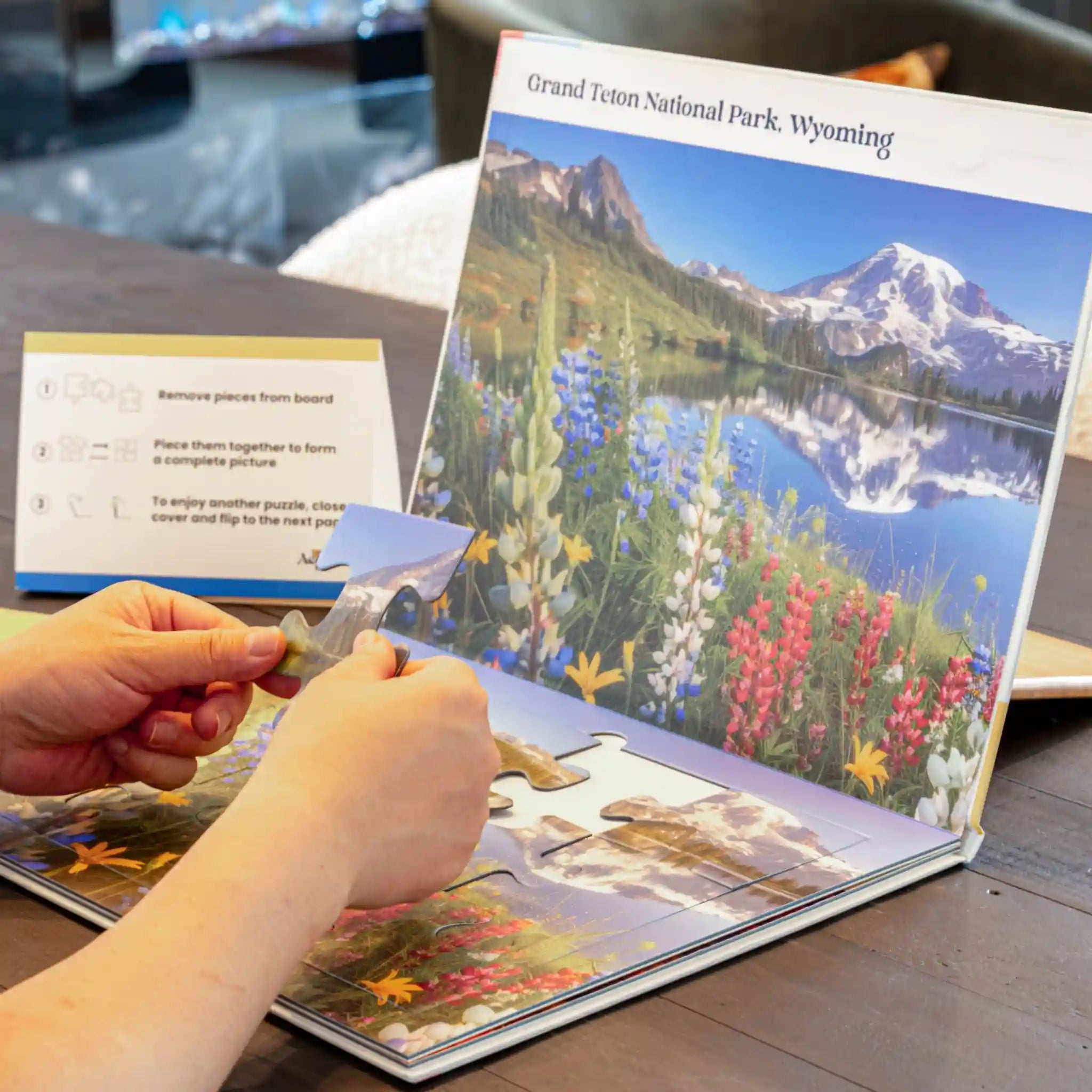
How to Use Picture Templates with Your Aegeliss Jigsaw Puzzles
A step-by-step guide to setting up your puzzle, choosing how much visual guidance to use, and enjoying each scene together.
What’s in Your Puzzle Book
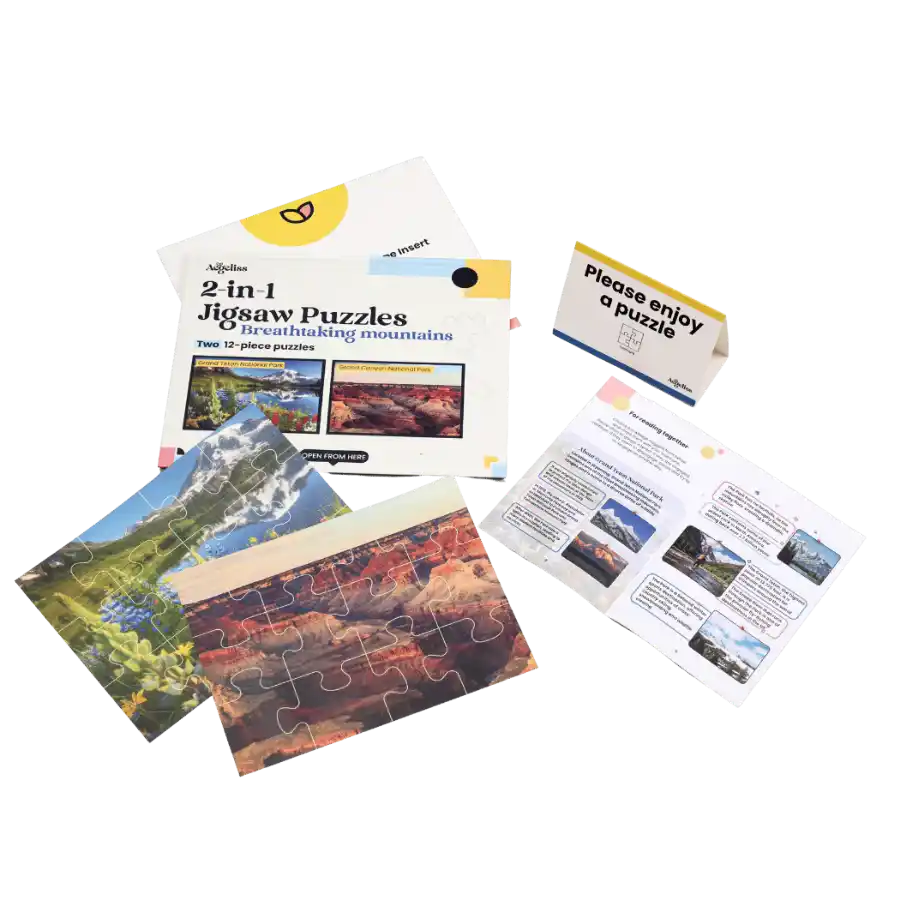
The Aegeliss two-in-one jigsaw puzzle book arrives with everything you need to get started:
- 2 large-piece puzzles, 12 pieces each
- 2 guided picture templates, one for each scene
- A built-in reference photo for each scene
- 1 discussion and instruction guide
- 1 visual cue table tent
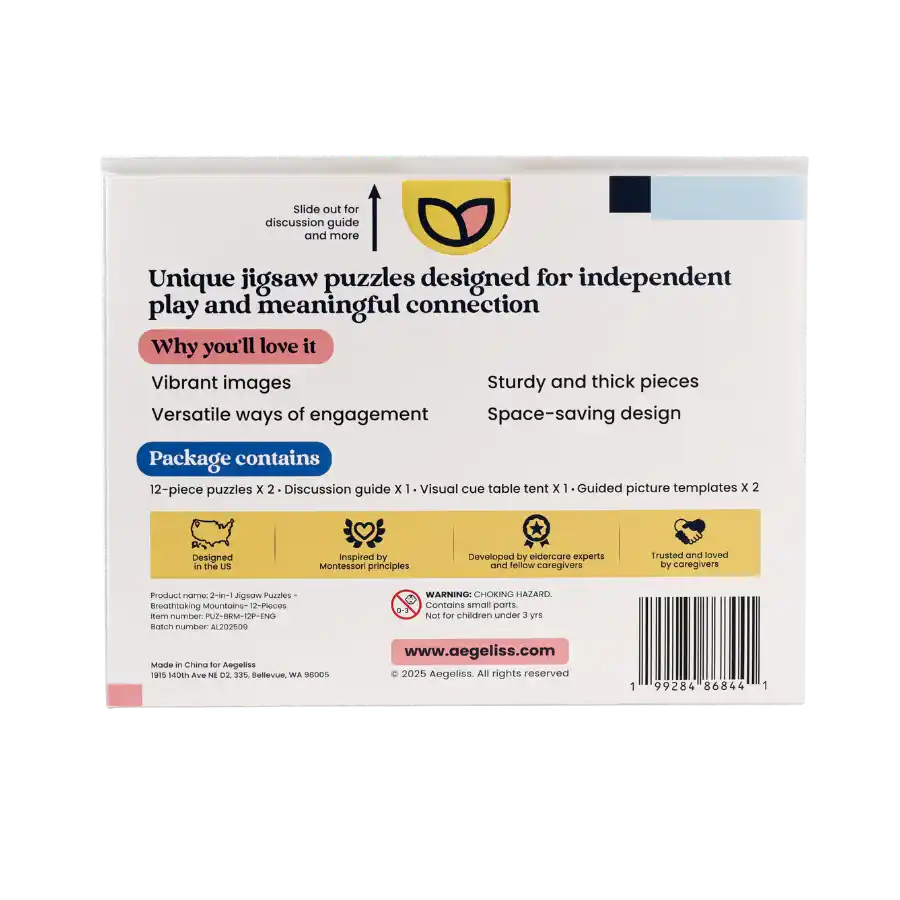
- 1 storage envelope attached at the back
Closed, the book measures 14.25" wide × 11.25" high, and each puzzle area is 12" × 9".
You don't need to use the templates every time. They're there whenever a little extra guidance helps.
Step-by-Step Instructions in Detail
1. Start With an Invitation
Choose a well-lit location, bring the puzzle book to your loved one, resident or patient and invite them to explore the book together.
Frame it as a shared activity. Saying something like, "I found this beautiful puzzle book and would love your help checking it out."
Encourage them to open the book themselves and check out the back envelope
Encourage them to set up the visual cue table tent and explore other contents on their own terms
Respect their pace. It may take them some time to check out all the content and that’s part of the engagement experience.
2. Choose a Scene Together
Open the book and look at the scene together. Talk about the images, the colors, or whatever stories come to their mind
These moments of storytelling can become some of the most meaningful and lasting parts of the experience.
3. Choose How to Use the Picture Template
Each puzzle comes with guided templates that can be set up to support each person’s unique needs. There's no right or no wrong way, so start with whatever feels comfortable and switch anytime.
1. Without the Template (Most challenging)
Build the puzzles directly on the table just like a regular puzzle.
2. Template Outside the Board, for Matching
Lay the template flat on the table and match each piece to its spot on the picture template.
3. Pieces Inside the Board without the Template
Piece the puzzle together inside the board. The edges of the board give the scene a clear frame, and the built-in reference photo is right at the eye level as a visual anchor.
4. Template Inside the Board and pieces on top
Place the template inside the board, then build on top of it. This gives the most visual support: the guided template right beneath each piece, and the full reference photo at the eye level.
5. Template on the Stand
Place the guided template on the stand and build in front of it.
4. Offer Help As Needed
Let them lead. Give them time to look at, hold and turn each piece at their own pace, even if it takes a long time.
Step in only if it’s needed
Offer one small hint, then pause
Follow their lead and let them problem solve on their own terms
For people living with dementia, solving a problem in their own way is a meaningful part of the activity. Turning a piece, trying a spot and trying again may take longer, and that time is part of the engagement.
5. Encouraging small group engagement
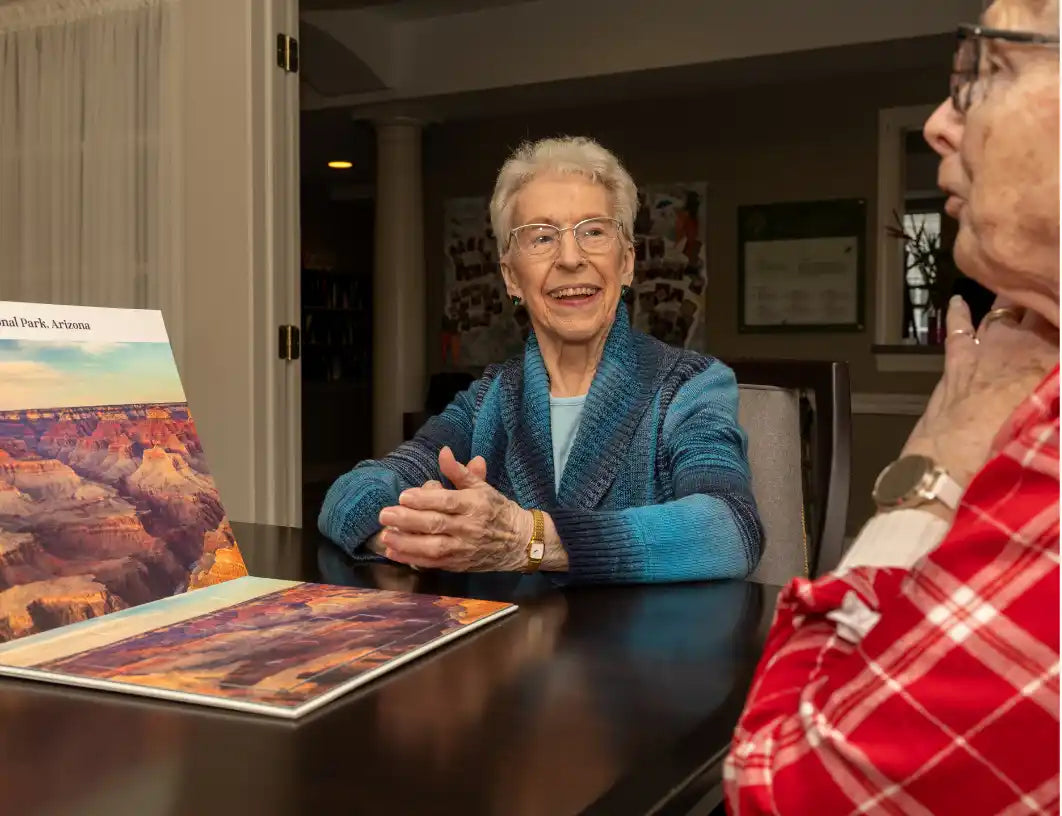
The puzzle is a natural fit for small groups in memory care. With large pieces and diverse ways to set up, people with different abilities can each find a way to take part, work as a team and support one another.
Invite a few friends to participate
Let the group help each other first. Step in only when someone asks
Celebrate together. Notice each piece that finds its place, and the teamwork that got it there
During an afternoon at a memory care community, four residents gathered around a single puzzle. They collaborated for more than 40 minutes, supporting and encouraging each other throughout the activity. When they finished, one resident shared, "I feel so much better now!"
6. Put Contents Away
Tuck the guide, templates and table tent back into the storage envelope, and keep it with the book so everything is ready for next time.
Add the Adjustable Display Stand (Highly Recommended)
We highly recommend the Adjustable Display Stand & Puzzle Holder, sold separately. Using the stand to hold the puzzle book upright ensures the reference photo remains easily visible from a comfortable, seated posture—minimizing neck strain and helping maintain focus.
See It in Action
- Large, easy-to-hold pieces: 12 pieces per scene, so each puzzle feels achievable.
- Guidance you can dial up or down: Use a template, the reference photo, or neither.
- Real places worth talking about: Grand Teton and Grand Canyon invite stories and memories.
- Everything in one place: The guide, templates and table tent tuck neatly into the storage envelope.
Caring for Your Puzzle
The puzzle book and pieces are made of paper and cardboard, so keep them dry.
The picture templates are water-resistant, but the rest of the puzzle isn't washable.